Introduction: Understanding NFC Chip Selection Matters
Near Field Communication (NFC) technology has become a core enabler of modern smart interactions—from mobile payments and digital business cards to industrial asset tracking and logistics automation. However, not all NFC chips are designed for the same purpose.
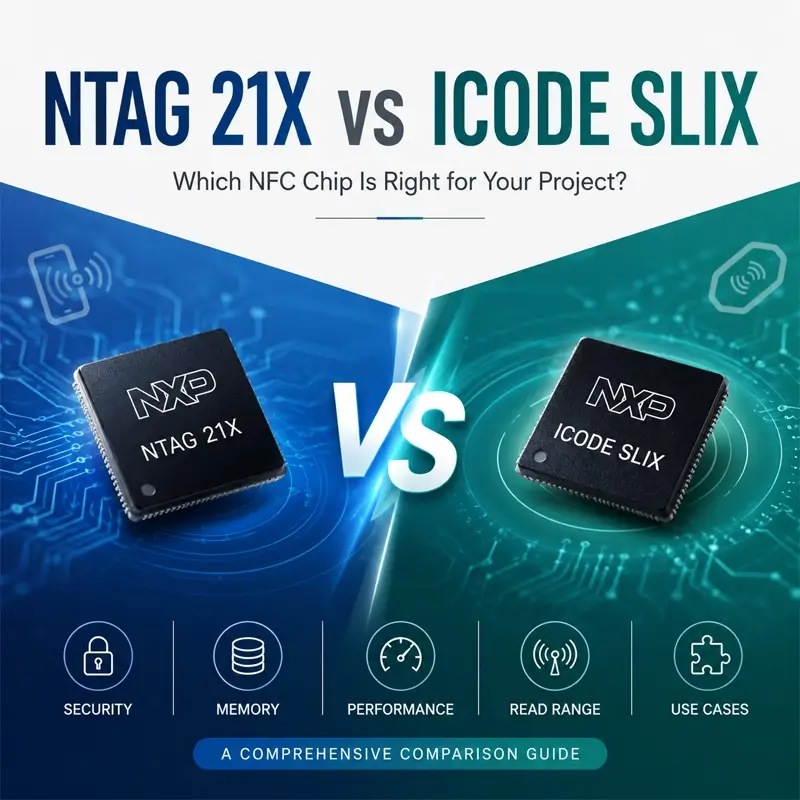
Among the most widely used NFC solutions from NXP are the NTAG 21x series and the ICODE SLIX series. While both belong to the NFC ecosystem, they are based on different standards and serve very different use cases.
This article provides a detailed comparison of NTAG 21x vs ICODE SLIX, helping you choose the right NFC chip for your application.
Overview of NTAG 21x Series
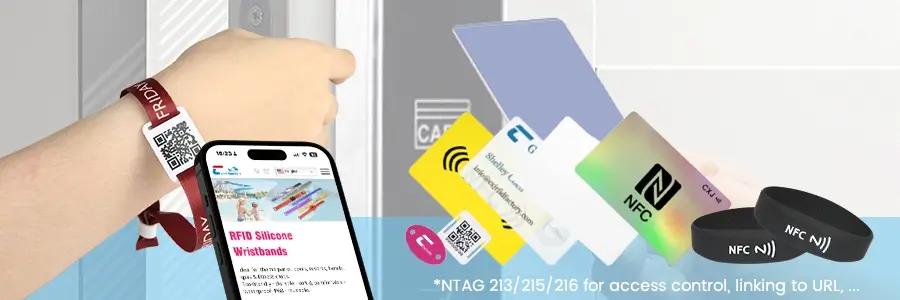
The NTAG 21x family (including NTAG213, NTAG215, and NTAG216) is one of the most popular NFC tag solutions for consumer applications.
Key Features
- Based on ISO/IEC 14443 Type A
- Designed for close-range NFC interactions (0–5 cm)
- High compatibility with smartphones (iOS & Android)
- Lightweight and cost-effective
Memory Comparison
|
Model
|
User Memory
|
Typical Use Case
|
|
NTAG213
|
144 bytes
|
URLs, simple actions
|
|
NTAG215
|
504 bytes
|
Amiibo, medium data storage
|
|
NTAG216
|
888 bytes
|
Larger data storage apps
|
Common Applications
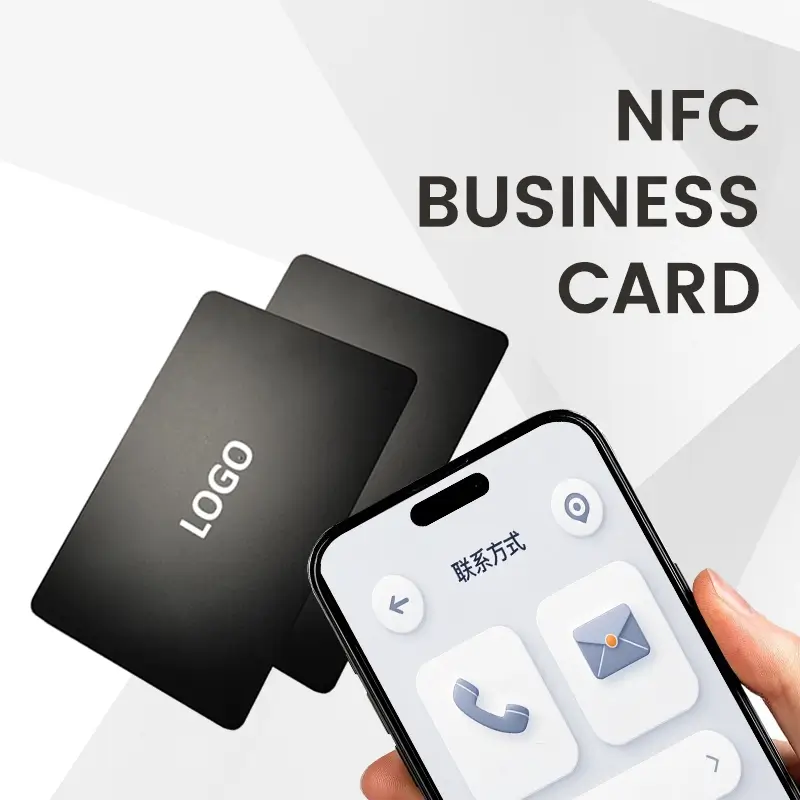
- NFC business cards
- Smart posters and marketing campaigns
- App launching and automation (Shortcuts, NFC tools)
- Consumer engagement experiences
Strengths
- Excellent smartphone compatibility
- Easy integration with mobile apps
- Low cost and widely available
Limitations
- Very short read range
- Not optimized for industrial scanning or bulk reading
Overview of ICODE SLIX Series
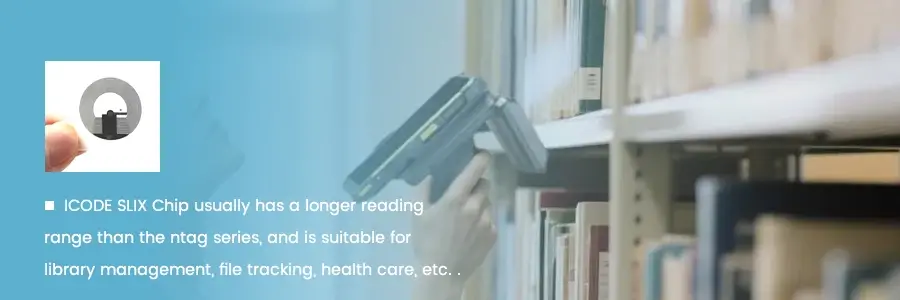
The ICODE SLIX family is designed for industrial, logistics, and identification systems where long-range and multi-tag reading is critical.
Key Features
- Based on ISO/IEC 15693 (Vicinity Cards)
- Longer reading distance compared to NTAG
- Anti-collision support (multiple tags can be read simultaneously)
- Designed for professional RFID/NFC systems
Variants Overview
|
Model
|
Features
|
|
ICODE SLIX
|
Standard performance
|
|
ICODE SLIX2
|
Enhanced security & memory
|
|
ICODE SLIX-L
|
Extended memory capacity
|
Common Applications
- Warehouse and inventory management
- Library book tracking
- Industrial asset tracking
- Supply chain logistics
Strengths
- Long reading range (up to 1 meter depending on reader)
- Excellent performance in bulk scanning environments
- Strong reliability in industrial settings
Limitations
- Limited direct smartphone compatibility
- Requires specialized NFC/RFID readers for full functionality
NTAG 21x vs ICODE SLIX: Technical Comparison
The following table highlights the most important differences:
|
Feature
|
NTAG 21x
|
ICODE SLIX
|
|
NFC Standard
|
ISO 14443A
|
ISO 15693
|
|
Operating Range
|
~1–5 cm
|
Up to ~1 meter
|
|
Smartphone Support
|
Excellent
|
Limited
|
|
Multi-Tag Reading
|
Limited
|
Strong (anti-collision)
|
|
Primary Use Case
|
Consumer NFC
|
Industrial RFID
|
|
Memory Capacity
|
Up to 888 bytes
|
Medium to large (varies by model)
|
|
Cost
|
Lower
|
Higher
|
Performance Differences Explained
1. Communication Range
NTAG 21x chips are optimized for tap-based interactions, requiring close proximity. In contrast, ICODE SLIX chips support vicinity communication, allowing multiple tags to be read at a distance.
2. Multi-Tag Environments
One of the biggest advantages of ICODE SLIX is its ability to handle dense tag environments. This makes it ideal for warehouses or libraries where hundreds of items may need scanning at once.
3. Smartphone Compatibility
NTAG 21x is the clear winner for mobile use cases. Most smartphones natively support ISO 14443A, making NTAG chips plug-and-play.
ICODE SLIX, however, typically requires dedicated RFID readers and is not fully supported by standard mobile devices.
Use Case-Based Recommendation
Choose NTAG 21x if you need:
- Mobile phone interaction
- Marketing campaigns
- NFC business cards
- Consumer-level applications
Choose ICODE SLIX if you need:
- Industrial tracking systems
- Warehouse or logistics scanning
- Multi-tag reading efficiency
- Long-range RFID performance
Cost Considerations
Cost is another important factor when selecting NFC chips.
|
Factor
|
NTAG 21x
|
ICODE SLIX
|
|
Unit Cost
|
Low
|
Moderate to high
|
|
Reader Cost
|
Minimal (smartphone OK)
|
Requires RFID readers
|
|
Deployment Cost
|
Low
|
Higher (industrial setup)
|
For large-scale consumer deployment, NTAG is significantly more cost-effective. For enterprise systems, ICODE SLIX justifies its higher cost through performance gains.
Conclusion: Which NFC Chip Should You Choose?
Choosing between NTAG 21x and ICODE SLIX ultimately depends on your application scenario.
- If your goal is consumer interaction, mobile compatibility, and low-cost deployment, NTAG 21x is the best choice.
- If your focus is industrial efficiency, long-range scanning, and multi-tag environments, ICODE SLIX is the superior solution.
Final Summary
- NTAG 21x = Smartphone + Consumer NFC
- ICODE SLIX = Industrial + Long-range RFID
Understanding this distinction ensures you select the right technology for maximum efficiency and performance.
If you still have questions regarding chip selection for your products, please feel free to contact rfidsilicone.com; we will provide you with more efficient and cost-effective NFC solutions.
-------------------
Welcome to contact us!
RFIDSilicone is Your Best RFID & NFC Partner!
19+ years experience in RFID products (RFID wristband, RFID sticker/tag, RFID card etc).
Our own factory passed ISO9001: 2015 & ISO14001:2015. We have SGS, ROHS, REACH, FDA certificates etc.